On this page
New Homes in Macclenny and Baker County
People ask me which builders are putting up new homes in Macclenny. Inventory changes, and I’m not going to invent a builder list or a price range that I can’t source. Here’s what you should check, and where to look at what’s actually for sale.

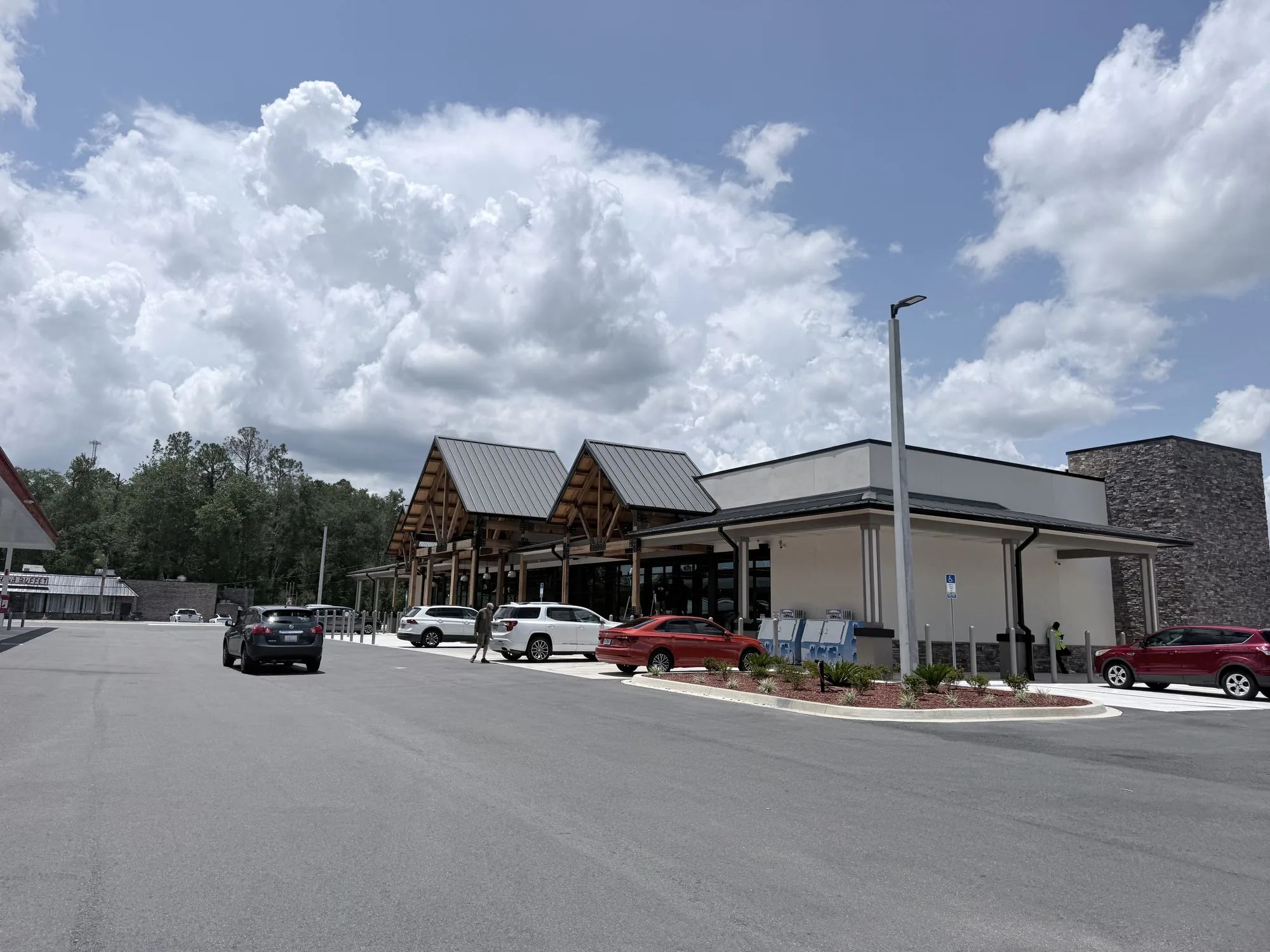
What this page will not list
I am not publishing a builder roster, floor plans, incentives, lot counts, or a starting price. Those change, and I will not invent them. Use the live listings search, new construction, and new construction guide, and confirm impact fees, well or septic versus city utilities, and builder warranties with the city or county and with the builder.
Official numbers for context
U.S. Census Bureau QuickFacts (Baker County): population estimate July 1, 2025, 29,737; 2020 Census 28,259; change 5.2%; households 2020–2024, 9,165; mean travel time to work (workers 16+, 2020–2024) 29.9 minutes; median household income (2024 dollars, 2020–2024) $79,836; per capita income $31,580; persons in poverty 13.0%; median value of owner-occupied housing units (2020–2024) $256,700. Source: QuickFacts, Baker County, Florida.
QuickFacts (Macclenny city): population estimate July 1, 2025, 8,251; 2020 Census 7,304; change 12.9%; mean travel time 26.5 minutes; median household income $73,942; per capita income $33,618; persons in poverty 9.5%. I do not invent a cost-of-living index, a median rent, or a drive time to a named Jacksonville destination. Source: QuickFacts, Macclenny city, Florida.
The Baker County Property Appraiser publishes 2025 millage (tax) rates. A mill is $1 per $1,000 of taxable value, after exemptions. These are the component rates on the official table:
| Taxing authority | 2025 rate (mills) |
|---|---|
| Board of County Commissioners | 7.2916 |
| School Board - State and Local | 5.3250 |
| City of Macclenny | 3.6000 |
| Hospital | 0.8557 |
| St. John’s Water Management District | 0.1793 |
| Suwannee River Water Management District | 0.2812 |
The same official table lists these totals by district: County (CO, SA, GL, MA) 13.6516 mills; City of Macclenny (MC) 17.2516 mills; Suwannee River (SR) 13.7535 mills. City millage applies only inside the City of Macclenny. Which water-management district applies depends on the parcel. To estimate a specific bill, start with taxable value after exemptions and use the Property Appraiser’s estimator at bakerpa.com. I will not invent a sample tax bill from a market price. Source: Baker County Property Appraiser, 2025 tax rates.
Florida’s homestead exemption is a statewide rule, administered locally by the county property appraiser. According to the Florida Department of Revenue (PT-113, R. 08/25), if you own the property and make it your permanent residence — or the permanent residence of a dependent — by January 1, and you file Form DR-501 with the county property appraiser by March 1, the property may qualify. Only the property appraiser decides whether a parcel is entitled to the exemption.
The first $25,000 of assessed value is exempt from all property taxes, including school district taxes. An additional exemption applies to assessed value over $50,000 and only to non-school taxes. That additional amount is adjusted when the CPI change is positive. The Department’s Additional Homestead Exemption Adjustment table (revised January 2026) lists the 2026 additional-exemption maximum as $26,411 (a 2.7% CPI change), after $25,722 in 2025 and a $25,000 base in 2024.
Homestead also qualifies the home for the Save Our Homes assessment limitation, and a homeowner may be able to transfer or “port” all or part of an assessment difference to a new Florida homestead. This page does not invent a Baker County example that assumes a market value. For the current forms and local filing instructions, use the Baker County Property Appraiser and these official documents: PT-113 and the CPI adjustment table.
Financing a new home
Do not assume a home qualifies for a USDA Single Family Housing Guaranteed loan because it is in Baker County, Macclenny, Glen St. Mary, or Sanderson. Eligibility is determined by the exact property address and by household income. Check the official USDA eligibility site (select Single Family Housing Guaranteed) before you rely on any town-level assumption. Address checks matter most in Macclenny’s more built-up area. This page does not publish a household income cap that has not been taken from USDA’s current official worksheet.
The mortgage calculator on this site can include property taxes, insurance and HOA in a monthly estimate. It does not approve a loan. See the Florida mortgage calculator.
Flood maps and the site
This is not insurance advice. A federally backed mortgage typically requires flood insurance when the building is in a high-risk Special Flood Hazard Area (zones beginning with A or V). Check the official map for the exact address and speak with a licensed insurance agent and the lender.
FEMA’s Community Status Book for Florida lists Baker County (CID 120419#) and the City of Macclenny (CID 120590#) as NFIP communities. Both show a current effective map date of June 17, 2008. Baker County’s CRS class is listed as 10. Glen St. Mary and Sanderson were not listed as separate NFIP communities in that book; I am not inventing a status for them. Source: FEMA Community Status Book, Florida.
Look up an address at the FEMA Map Service Center or in the National Flood Hazard Layer. FEMA’s flood insurance overview explains the program at a national level.
Baker County’s 2040 Comprehensive Plan (Ordinance 2020-30), Policy A.1.1.1, says the county uses the latest FEMA flood hazard maps; development in the FEMA 100-year flood hazard zone must have the lowest floor at least one foot above the base flood elevation; compensatory storage is required for dredging or filling; septic use in the 100-year floodplain is restricted as specified by the Flood Management Ordinance and the County Health Department; and development must connect to central sewer when collection lines are within 250 feet. Confirm current application of those policies with the county. Source: Baker County 2040 Comprehensive Plan.
The county CEMP describes floodplains associated with the St. Marys River and tributaries including Turkey Creek, Little St. Marys River, Middle Prong St. Marys River, Cedar Creek, and Moccasin Creek, and large wetlands in the headwaters (Pinhook Swamp, Okefenokee Swamp, Big Gum Swamp, New River Swamp, Impassable Bay). Source: Baker County CEMP.
Schools
The Baker County School District lists these schools. I do not invent ratings, test scores, or enrollment figures.
- Baker Learning Center
- Macclenny Elementary School
- Westside Elementary School
- Legacy Elementary School
- Baker County Middle School
- Baker County High School
- Baker County Virtual School
For assignment zones, calendars and enrollment, go to the district. See also schools in Baker County.
Frequently asked questions
Who is building in Macclenny right now?
I am not going to post a builder list that can go stale. Search live listings and confirm the builder, price and warranties on the specific house.
Are new homes in Baker County USDA eligible?
Baker County and Macclenny building permit numbers (2019 to 2025)
I will not guess how many new homes builders are putting up right now, but the U.S. Census Bureau Building Permits Survey (county annual data) shows how residential permitting has actually moved in Baker County, FL (FIPS 12003). These tables track new privately-owned residential units authorized by building permits; every dollar figure is the reported construction cost listed on permits, not a home sale price.
| Year | 1-unit buildings | 1-unit units | 1-unit reported construction cost (not sale price) | 2-unit units | 5+ units |
|---|---|---|---|---|---|
| 2019 | 133 | 133 | $23,081,871 | 0 | 0 |
| 2020 | 152 | 152 | $27,844,012 | 0 | 0 |
| 2021 | 116 | 116 | $22,189,909 | 0 | 0 |
| 2022 | 126 | 126 | $23,615,586 | 0 | 80 |
| 2023 | 62 | 62 | $13,283,166 | 12 | 0 |
| 2024 | 99 | 99 | $24,106,448 | 0 | 0 |
| 2025 | 99 | 99 | $38,469,525 | 22 | 0 |
Single-family 1-unit permits make up almost all residential permitting in Baker County, with multifamily permits showing up only in specific years (80 units in 5+ unit structures in 2022, 12 units in 2-unit structures in 2023, and 22 units in 2-unit structures in 2025). Single-family permits dipped to 62 in 2023 before rebounding to 99 in both 2024 and 2025, while total reported 1-unit permit construction cost (not home sale prices) reached $38,469,525 in 2025.
Unincorporated Baker County versus the City of Macclenny (2020 to 2025)
The Census Bureau's Building Permits Survey place annual data (South Region) splits 1-unit permits between Baker County Unincorporated Area and Macclenny—a useful distinction if you are deciding between city limits and unincorporated Baker County. As in the county table, the dollar column reflects reported permit construction cost, not retail sale prices.
| Year | Permit-issuing place | 1-unit units | Reported permit construction cost (not sale price) |
|---|---|---|---|
| 2020 | Baker County Unincorporated Area | 75 | $14,624,357 |
| 2020 | Macclenny | 77 | $13,219,655 |
| 2021 | Baker County Unincorporated Area | 81 | $16,761,712 |
| 2021 | Macclenny | 35 | $5,428,197 |
| 2022 | Baker County Unincorporated Area | 67 | $13,935,567 |
| 2022 | Macclenny | 59 | $9,680,019 |
| 2023 | Baker County Unincorporated Area | 57 | $12,345,166 |
| 2023 | Macclenny | 5 | $938,000 |
| 2024 | Baker County Unincorporated Area | 95 | $23,459,248 |
| 2024 | Macclenny | 4 | $647,200 |
| 2025 | Baker County Unincorporated Area | 94 | $37,999,525 |
| 2025 | Macclenny | 5 | $470,000 |
From 2020 through 2022, permits were active in both jurisdictions, including 77 single-family units in Macclenny in 2020 and 59 in 2022. From 2023 through 2025, almost all 1-unit permits were issued in the Baker County Unincorporated Area (57 in 2023, 95 in 2024, and 94 in 2025), while Macclenny recorded 5 units in 2023, 4 in 2024, and 5 in 2025.
How to read Census permit definitions accurately
Check the Building Permits Survey Definitions before drawing conclusions from the tables:
- Value is reported permit construction cost, not sale price. Valuation is the estimated value of the residential structure shown on the building permit (or an estimate from the permit official if none is listed). Do not treat it as a retail home sale price.
- Permits are authorizations, not completions. New Residential Construction covers five phases: units authorized by permit, authorized but not yet started, started, under construction, and completed. These tables count authorizations only.
- HUD-code manufactured homes are excluded. Housing units here include conventional site-built, prefabricated, panelized, sectional, and modular units. HUD-code manufactured (mobile) homes (movable dwellings 8 feet or more wide and 40 feet or more long towed on their own chassis without need of a permanent foundation) are excluded and tracked in the Manufactured Housing Survey instead. See the mobile and manufactured homes guide if you are comparing factory-built options.
- Single-family versus multifamily rules. Single-family 1-unit counts include detached, semidetached, row houses, and townhouses separated by a ground-to-roof wall with no shared heating, air-conditioning, or utilities. Stacked units or side-by-side units lacking a ground-to-roof wall or sharing common facilities are counted as multifamily (2 units, 3 and 4 units combined, or 5 or more units).
- Privately-owned only, no conversions. The survey excludes publicly-owned housing, group quarters (dormitories, rooming houses), transient accommodations (hotels, motels), moved or relocated buildings, and units created inside existing structures.
- Imputation and the 2023 universe update. Missing local reports are filled from the Survey of Construction (covering about 900 permit offices) or imputed. Beginning in January 2023, the Census Bureau switched from fixed universes (such as the 2014 universe of approximately 20,100 permit-issuing places used through December 2022) to an annually updated universe of approximately 19,900 permit-issuing places as of January 2023.
Baker County building permits, impact fee, and required inspections
In unincorporated Baker County, residential permitting runs through the Baker County Community Development Department (Building, Planning, Zoning, and Code Enforcement) and the Baker County Building Department. Inside Macclenny city limits, confirm with the city and county which office handles your permit and utility hookups.
Office details and contractor credentials
Community Development and the Building Department share the office at 360 E Shuey Ave, Macclenny, FL 32063 (phone 904.259.2403, fax 904.259.5057, email buildingdepartment@bakercountyfl.org), open weekdays 8:30am to 5:00pm and closed weekends and holidays. Before pulling permits in Baker County, state certified contractors must furnish a current state license, liability insurance and workers comp (or a Workers Comp Exemption Form if exempt), an occupational license, and a $50 filing fee. If anyone other than the license holder purchases the permit, the office requires an original, notarized authorization (such as a Power of Attorney) signed by the contractor listing who is authorized to pull permits.
Documents required in the permit packet (FORM 02/2023)
The Baker County Permit Application (FORM 02/2023) asks for the 18-digit Parcel ID (plus section, township, range, subdivision, block, and lot), the Home Owner/Builder or qualifier's personal name, Scope of Work, Cost of Construction, Power Company, and these review documents:
| Document on FORM 02/2023 | Details |
|---|---|
| Structural and architectural engineer plans | 2 sets (3 for commercial) |
| Truss drawings | 2 sets of truss documentation |
| Energy forms | 2 sets submitted for plan review |
| Septic Approval Letter | Needed when using onsite septic instead of central sewer |
| 911 Address Letter | Issued through the Baker County Property Appraiser (32 N 5th St., Suite B, Macclenny, FL 32063; phone (904) 259-3191) |
| Recorded Notice of Commencement (NOC) | Recorded with the clerk and posted on site |
| Recorded deed and Site Plan | Proof of ownership and parcel layout |
In the office-use section, county staff record Zoning Director approval or denial along with Future Land Use, Zoning, Floodplain Data, Acreage, and Family Lot, Temporary Family Lot, or Subdivision Lot / Lot of Record status. You can view Baker County Zoning, Future Land Use, and FEMA Flood Zones by turning on those layers from the top-right menu on the Property Appraiser's map. See also the Baker County land and acreage guide and the flood zones guide.
New Dwelling Impact Fee ($2592.00 on FORM 02/2023) and lot utility rules
FORM 02/2023 lists a New Dwelling Impact Fee of $2592.00. Confirm the current fee with Community Development at 904-259-2403 before budgeting, and verify whether your builder's contract includes it. On smaller lots, the Baker County Zoning and Setbacks chart states that development must meet building codes and have BCHD-approved well and septic, parcels less than 0.5 acres must have central water, and parcels 0.25 acres or less must have central water and sewer plus curbs and gutters.
Required inspections and the 4pm scheduling cutoff
Call the Inspection Line at 904.259.4896 by 4pm to schedule an inspection for the next business day; calls after 4pm are scheduled two business days out. FORM 02/2023 lists every required trade and closeout inspection:
| Category | Required inspections on FORM 02/2023 |
|---|---|
| Building | Footings, Blocking, Slab, Floor Framing, Framing, Sheathing (Roof, Ext Walls, Floor), Firewall, Insulation, Chimney |
| Electrical | Rough-In, Temp Serv., Perm Serv., Electric Final |
| Plumbing | Rough In, Stackout, Sewer, Water Supply, Plumbing Final |
| Mechanical | Rough in, Final, Gas Test, Gas Vent, Gas Final |
| Pool (if applicable) | Grounding, Steel/Shell, Final, Safety Before Water |
| Specialty and closeout | Termite Treatment, Strapping, Blower Door Test, Special Inspection, FINAL, CERTIFICATE OF OCCUPANCY |
Before closing on any newly built house, ask for copies of the passed inspection history and the final Certificate of Occupancy.
Florida Building Code edition, energy forms, and blower door testing
According to the Florida Building Commission, the effective date for the Florida Building Code, 8th Edition (2023), is December 31, 2023. The Commission also posts materials for the 2026 Update (including tracking charts) and an Energy Reporting Reminder for Building Officials. Confirm with Baker County Building Department which code edition applies when your permit is submitted. The Commission's office is at 2601 Blair Stone Road, Tallahassee, FL 32399 (phone 850-487-1824).
State code enforcement versus local site rules
Under Florida Statutes s. 553.38, state enforcement covers the Florida Building Code, while local land use and zoning, fire zones, setbacks, side and rear yard rules, site development, property lines, subdivision control, onsite installation, and architectural and aesthetic review remain reserved to local authorities. Local rules must be reasonable and uniformly applied without distinction between conventionally built and manufactured (modular) buildings, and local permit fees for factory-built structures may cover only inspections actually performed at the same fee charged for conventional housing.
Energy forms and the blower door test
In Baker County, energy compliance shows up at both ends of the Permit Application (FORM 02/2023) listed above—plan review (2 sets of energy forms) and required inspections (insulation and a blower door test before final sign-off). Ask your builder for copies of the energy forms and passed blower door test record before closing.
Notice of Commencement: how Florida lien law affects a new build
A recorded Notice of Commencement (NOC) is part of Baker County's Permit Application packet above, and Community Development provides the form on its website. What follows summarizes Florida Statutes s. 713.13 and is not legal advice; consult a Florida attorney or your construction lender before recording an NOC or disbursing draw payments.
Recording, posting, and required information
Before actually commencing to improve real property (or recommencing after default or abandonment), the owner or owner's authorized agent must record an NOC in the clerk's office and post either a certified copy or a notarized statement that it was filed for recording along with a copy. The statutory form warns that the NOC must be recorded and posted on site before the first inspection. The owner must sign the notice personally; no one else may sign in the owner's stead.
Under s. 713.13, the notice must identify the legal description (plus street address and tax folio number if available), a general description of the improvement, the owner's name, address, and site interest (and fee simple titleholder if different, or a leasehold statement if a lessee contracts for the work), the contractor, any payment bond surety and bond amount (with a copy of the payment bond attached at recording), any construction lender, and any person in Florida designated to receive notices or optional lienor notice copies. Recording an NOC is not a lien or cloud on title, but gives constructive notice that Chapter 713 lien claims may be recorded and take priority.
Key timelines, amendments, and lender duties
- 90-day start window: If work does not actually commence within 90 days after recording, the NOC is void and of no further effect.
- 1-year default term and paying-twice risk: Unless a longer period is stated (required when a construction contract exceeds 1 year), an NOC expires 1 year after recording. Payments made by the owner after expiration are improper payments under Chapter 713, Part I, and can result in paying twice for improvements.
- Amending versus switching contractors: Within the effective period, an owner may record an amended notice citing the original official records book and page and serve copies on the contractor and lienors who serve notice before or within 30 days after recording. To change contractors, however, a new NOC or notice of recommencement must be executed and recorded.
- Lender recording duty: Before disbursing construction funds to the contractor, a construction lender must record the NOC and designate itself to receive notices to owner, or be liable to the owner for resulting damages. Posting the certified copy at the job site remains the owner's responsibility.
Buyer deposit protections for new construction under Florida law
Deposits paid toward a new one-family or two-family home are governed by Florida Statutes s. 501.1375. This summarizes the statute and is not legal advice; have a Florida attorney review your builder contract before waiving any escrow protection.
The 10-unit-per-year threshold
Section 501.1375 covers building contractors and developers who construct or sell one-family or two-family residential dwelling units, except any person who sells or constructs less than 10 units per year statewide. In a rural county like Baker County, smaller local builders may fall under that exemption. Ask how many units the builder builds statewide, and if the statute does not apply, ask your attorney about voluntary third-party escrow terms.
Right to escrow up to 10 percent and written waivers
Covered builders and developers must notify buyers in conspicuous contract type that: THE BUYER OF A ONE-FAMILY OR TWO-FAMILY RESIDENTIAL DWELLING UNIT HAS THE RIGHT TO HAVE ALL DEPOSIT FUNDS (UP TO 10 PERCENT OF THE PURCHASE PRICE) DEPOSITED IN AN ESCROW ACCOUNT. THIS RIGHT MAY BE WAIVED, IN WRITING, BY THE BUYER. Eligible escrow holders are a savings and loan association, bank, or trust company; a Florida Bar attorney; a licensed Florida real estate broker; or an authorized Florida title insurance company. Section 501.1375 does not apply to escrow accounts required by the Federal Housing Administration or U.S. Department of Veterans Affairs, or to deposits held by licensed brokers under Chapter 475.
Bonds, interest, defaults, and penalties
- Joint control and interest: Unless waived or released under a statutory exception, withdrawals require both parties' signatures. Accrued interest goes to the builder at closing, unless the buyer properly terminates the contract (in which case deposits plus accrued interest return to the buyer).
- Surety bond or loan draw options: After notifying the buyer, a builder may use escrowed funds for construction only by posting a Florida-licensed surety bond payable to the buyer, or a blanket master surety bond (where the buyer is debited at closing for the pro rata bond premium). If no bond is available, the builder may borrow an equal amount for construction only, and the buyer pays loan interest for up to 12 months at closing, credited for escrow interest earned.
- 72-hour default notice: If a buyer defaults while the builder is not in default, the builder must send written notice by certified mail at least 72 hours before withdrawing escrowed funds with a withdrawal slip, passbook if any, and default affidavit.
- Lien shield and enforcement: Escrowed funds and statutory surety bonds are protected from Chapter 713 liens, lender liens (unless contracted by the buyer), and subrogation on default, though after closing the buyer cannot claim escrowed funds for breach of contract. Willful escrow violations are a third-degree felony, failing to deposit required funds within 10 days of receipt is prima facie evidence of a violation, and the prevailing party in civil litigation under s. 501.1375 recovers attorney's fees and costs.
Post-closing construction deadlines and offsite warranty limits
Two Florida statutes set key boundaries after closing if a defect appears. This summarizes the statutes and is not legal advice; consult a Florida construction or real estate attorney on any specific claim.
Statute of repose and trigger dates (Florida Statutes s. 95.11)
Florida Statutes s. 95.11 governs actions founded on the design, planning, or construction of an improvement to real property:
- Trigger date: The clock starts on the earliest date the authority having jurisdiction issues a temporary certificate of occupancy, certificate of occupancy, or certificate of completion, or the date of abandonment if not completed.
- Latent defects and 7-year outer limit: For a latent defect, the limitations period runs from when the defect is discovered or should have been discovered with due diligence, but in any event the action must be commenced within 7 years after the earliest trigger date.
- Warranty repairs do not extend the deadline: For permitted construction with a temporary certificate of occupancy, certificate of occupancy, or certificate of completion, repairing or correcting completed work, whether under warranty or otherwise, does not extend the time to sue.
- Model homes and multi-building projects: For a newly built single-dwelling home used as a model home, time begins when a deed first transferring title to another party is recorded. Where a project covers multiple buildings, each building is its own improvement. Related counterclaims, cross-claims, and third-party claims may be filed up to 1 year after service of the pleading to which they relate.
Implied warranty limits on offsite improvements (s. 553.835)
Under Florida Statutes s. 553.835, neither a home purchaser nor a homeowners' association has an implied warranty cause of action (fitness, merchantability, or habitability) for damages to offsite improvements. The statute defines offsite improvements as streets, roads, driveways, sidewalks, drainage, utilities, or other structures either not located on or under the lot (excluding shared structural improvements of adjoined or attached homes) or located on or under the lot without immediately and directly supporting the home's habitability. Other contract, tort, and statutory claims remain intact, so read the builder's written warranty closely before closing.
Required disclosures, Florida closing taxes, and utility setup
Before closing on a new home in Baker County, plan for three mandatory Florida contract disclosures, state recording taxes, federal mortgage closing forms, and city utilities, power, or county septic sign-offs.
Mandatory Florida disclosures before signing
- Property tax reassessment (s. 689.261): Under Florida Statutes s. 689.261, buyers must receive a disclosure summary at or before contract execution warning not to rely on the seller's current taxes because a change of ownership or property improvements triggers reassessments that can raise taxes (especially when prior taxes covered vacant land).
- Flood risk disclosure (s. 689.302): Under Florida Statutes s. 689.302, the seller must provide a completed flood disclosure at or before contract execution noting that homeowners' insurance excludes flood damage and answering whether the seller knows of flooding damage during ownership, filed a flood claim (including NFIP), or received flood assistance (including FEMA). Flooding includes inland or tidal overflow, rapid runoff from a river, stream, or drainage ditch, and sustained standing rainfall water.
- Radon gas notice (s. 404.056): Under Florida Statutes s. 404.056, sale documents must include the statutory radon notification pointing buyers to the county health department for testing details; paid radon testers and mitigators must be state-certified.
Florida closing taxes and federal mortgage review
State recording taxes administered by the Florida Department of Revenue apply at closing (all parties are liable to the state regardless of who agrees to pay in the contract, so check the builder's closing-cost terms):
| Florida closing tax | Rate in Baker County | Statutory rule |
|---|---|---|
| Deed documentary stamp tax | 70 cents per $100 (or fraction thereof) | F.S. s. 201.02; based on total consideration including money paid or agreed to be paid and any mortgage or encumbrance. |
| Mortgage documentary stamp tax | 35 cents per $100 (or fraction thereof) | F.S. s. 201.08; uncapped on recorded mortgages (unrecorded written notes are capped at $2,450). |
| Nonrecurring intangible tax | 2 mills per dollar secured | F.S. s. 199.133; one-time tax on obligations secured by a Florida mortgage. |
Compare your Loan Estimate against the Closing Disclosure, which lenders must deliver three business days before scheduled closing. Verify seller or builder credits, confirm whether taxes and insurance are collected in an escrow account, and check monthly estimates with the mortgage calculator.
Macclenny utilities, electric service, and county septic
- City of Macclenny utilities: The City of Macclenny Utilities Department (904-259-6261, utilities@cityofmacclenny.com) provides water, sewer, and garbage inside the city and water-only service in Macclenny II. Its New Residential Account Application lists deposits of $125 ($100 Macclenny II, $175 Greystone). The Oct 1, 2023 utility rate sheet notes a $25.00 non-refundable administrative fee inside the deposit and lists inside-city residential base charges of $13.75 water/irrigation, $19.58 sewer, and $31.54 refuse/garbage (outside-city base charges $20.62 water/irrigation and $29.39 sewer; confirm current rates and connection fees with the city). St. Johns River Water Management District rules restrict outdoor irrigation year-round to before 10 a.m. or after 4 p.m.
- Electric power: Clay Electric Cooperative directs new-construction service inquiries to 800-224-4917 (outage line 855-939-3840). Confirm which power company serves your parcel.
- County septic systems: The Florida Department of Environmental Protection has overseen septic statutes and rules since July 1, 2021, while county health departments permit and inspect tanks under the Clean Waterways Act of 2020 (locally, Florida Department of Health in Baker County Environmental Public Health, 904-259-6291). Under Florida Statutes s. 381.0065, no building permit may issue without a septic construction permit (valid 18 months, one 90-day extension; transferable fee-free within 60 days of ownership transfer if siting conditions stay the same), and occupancy cannot be authorized until final septic approval.
New-construction buyer checklist for Macclenny and Baker County
Use this checklist from contract through move-in. If you are still comparing locations, pair it with the Moving to Macclenny guide, the Baker County guide, and the pages for Glen St. Mary and Sanderson.
Before signing a builder contract
- Confirm whether the parcel is inside Macclenny or unincorporated Baker County, check zoning and flood layers on the Property Appraiser's map, and verify city utilities versus well and septic.
- Verify whether Florida's deposit escrow law (F.S. s. 501.1375 above) applies to your builder, and consult a Florida attorney before signing any written escrow waiver.
- Confirm receipt of all three mandatory Florida disclosures listed above (property tax, flood risk, and radon).
- Check who pays the county New Dwelling Impact Fee and Florida's deed and mortgage recording taxes (listed in the permit and closing sections above).
- Read the builder's written warranty for offsite items like driveways, sidewalks, and drainage, since implied warranties do not cover them under F.S. s. 553.835 above.
During construction, closing, and move-in
- Confirm the contractor is credentialed with the Baker County Building Department and that the Notice of Commencement is recorded, posted before the first inspection, and kept active through completion (see the NOC timelines above).
- Collect copies of passed inspections (including energy forms, the blower door test, termite treatment, and final septic approval if applicable) and the Certificate of Occupancy before closing.
- Compare your Closing Disclosure against your Loan Estimate during the three-business-day review window for builder credits, escrow accounts, and cash to close.
- Set up city utilities or electric service, save your Certificate of Occupancy date to track the F.S. s. 95.11 repose period above, and follow the homestead exemption filing steps earlier on this page if the home will be your permanent residence.
Ready to look at current new-construction listings or check a specific parcel? Reach out to me directly and I will help you verify the local records.
Common questions about new construction in Macclenny and Baker County
Why do Census building permit dollar figures look lower than a new home's sale price?
They are not sale prices. The Census Building Permits Survey reports the estimated construction cost of the residential structure listed on the building permit, not a retail sale price. See the Census permit definitions above for full details.
How do I confirm the current Baker County new dwelling impact fee?
Baker County's permit application (FORM 02/2023) lists $2592.00; call Community Development (listed in the permit section above) to confirm the current fee and check whether your builder contract covers it.
Does every Florida builder have to escrow my new-home deposit?
No. Florida Statutes s. 501.1375 exempts builders constructing or selling fewer than 10 units per year statewide, and buyers can still waive escrow in writing. See the deposit protections section above for surety-bond rules and escrow limits.
What happens if a Notice of Commencement expires during construction?
Under Florida Statutes s. 713.13, owner payments made after expiration are improper payments that can leave you paying twice for improvements. See the Notice of Commencement section above for the 90-day start window, 1-year default term, and amendment rules.
Do warranty repairs extend Florida's 7-year construction repose deadline?
No. Under Florida Statutes s. 95.11, warranty repairs or defect corrections to completed permitted work do not extend the time to sue. See the post-closing deadlines section above for trigger dates and model-home rules.
Are driveways, sidewalks, and drainage covered by Florida's implied warranty?
Not when they fall under Florida Statutes s. 553.835's definition of offsite improvements, though written contract, tort, and statutory remedies still apply. See the offsite warranty section above for what the statute excludes.
Can a new home on septic be occupied before final health department approval?
No. Under Florida Statutes s. 381.0065, occupancy cannot be authorized until final installation of the septic system is approved. See the county septic summary in the closing and utilities section above.
More Baker County guides
Sources
- Baker County Property Appraiser, 2025 tax rates
- Baker County 2040 Comprehensive Plan (Ordinance 2020-30)
- FEMA Flood Map Service Center
- USDA Income and Property Eligibility site
- Baker County School District
- U.S. Census Bureau Building Permits Survey — County Annual Files (2019–2025)
- U.S. Census Bureau Building Permits Survey — Place Annual Files, South Region (2020–2025)
- U.S. Census Bureau Building Permits Survey Definitions
- Baker County Permit Application (FORM 02/2023)
- Baker County Building Department
- Baker County Community Development Department
- Baker County Zoning and Setbacks chart
- Florida Building Commission (Florida Building Code)
- Florida Statutes s. 553.38 (Florida Building Code and local authority)
- Florida Statutes s. 713.13 (Notice of Commencement)
- Florida Statutes s. 501.1375 (Deposits for residential dwelling units)
- Florida Statutes s. 95.11 (Limitations of actions / construction repose)
- Florida Statutes s. 553.835 (Implied warranties and offsite improvements)
- Florida Statutes s. 689.261 (Ad valorem tax disclosure summary)
- Florida Statutes s. 689.302 (Residential flood risk disclosure)
- Florida Statutes s. 404.056 (Radon gas notification and certification)
- Florida Department of Revenue — Documentary Stamp Tax
- Florida Statutes s. 201.02 (Tax on deeds)
- Florida Statutes s. 201.08 (Tax on promissory notes and mortgages)
- Florida Statutes s. 199.133 (Nonrecurring intangible tax on mortgages)
- Consumer Financial Protection Bureau — Loan Estimate Explainer
- Consumer Financial Protection Bureau — Closing Disclosure Explainer
- Consumer Financial Protection Bureau — Escrow or Impound Accounts
- City of Macclenny Utilities Department
- City of Macclenny Utility Rates (effective Oct 1, 2023)
- City of Macclenny New Residential Account Application
- Clay Electric Cooperative
- Florida Department of Environmental Protection — Onsite Sewage Program
- Florida Department of Health in Baker County — Environmental Public Health
- Florida Statutes s. 381.0065 (Onsite sewage treatment and disposal systems)
Work with me
I’ll give you straight answers about Baker County. If I don’t know something, I’ll find the official source.
Amanda Kinard, REALTOR®
Florida Sales Associate SL3383199
Direct: (904) 650-5297 · amanda@callingjaxhome.com
Momentum Realty · License BK1059905
12627 San Jose Blvd Suite 303, Jacksonville, FL 32223 · Office: (904) 903-1558 · momentumbkr@gmail.com
Office 9–5 · Texting 8 AM–7:30 PM Mon–Fri · Email 24/7