On this page
Baker County Land and Acreage Guide
A lot of people move here for the land. Before you buy raw land or acreage in Baker County, check the floodplain, septic and sewer rules, the taxing district and the financing. Here’s what the official sources say.

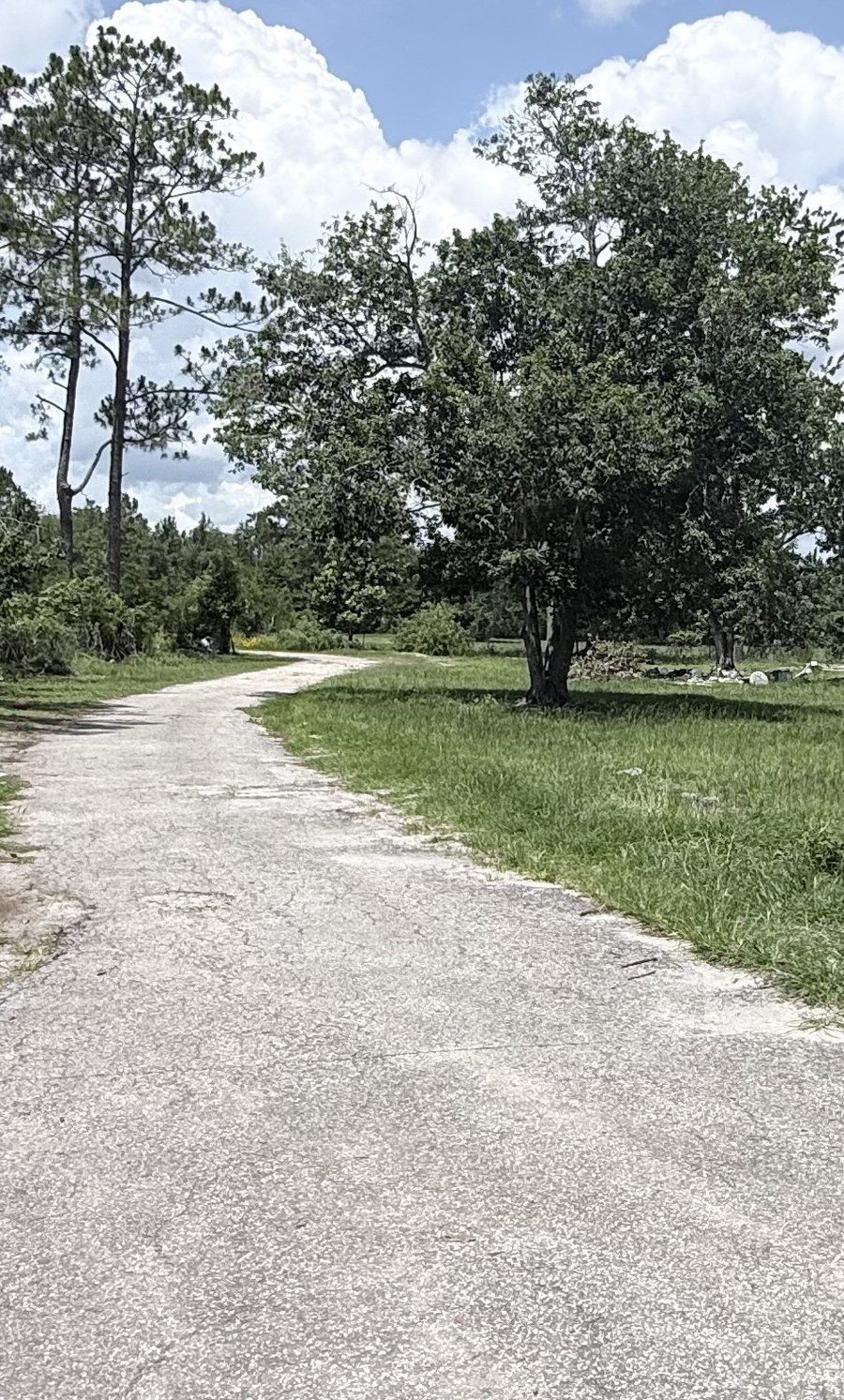
What land buyers in Baker County should verify
This is a guide to the official rules and numbers that come up when someone is looking at acreage in Baker County. It is not a list of lots for sale and it does not invent a price per acre. Inventory changes; use the live listings search for what is on the market today.
U.S. Census Bureau QuickFacts (Baker County): population estimate July 1, 2025, 29,737; 2020 Census 28,259; change 5.2%; households 2020–2024, 9,165; mean travel time to work (workers 16+, 2020–2024) 29.9 minutes; median household income (2024 dollars, 2020–2024) $79,836; per capita income $31,580; persons in poverty 13.0%; median value of owner-occupied housing units (2020–2024) $256,700. Source: QuickFacts, Baker County, Florida.
QuickFacts (Macclenny city): population estimate July 1, 2025, 8,251; 2020 Census 7,304; change 12.9%; mean travel time 26.5 minutes; median household income $73,942; per capita income $33,618; persons in poverty 9.5%. I do not invent a cost-of-living index, a median rent, or a drive time to a named Jacksonville destination. Source: QuickFacts, Macclenny city, Florida.
Property taxes on land and acreage
The Baker County Property Appraiser publishes 2025 millage (tax) rates. A mill is $1 per $1,000 of taxable value, after exemptions. These are the component rates on the official table:
| Taxing authority | 2025 rate (mills) |
|---|---|
| Board of County Commissioners | 7.2916 |
| School Board - State and Local | 5.3250 |
| City of Macclenny | 3.6000 |
| Hospital | 0.8557 |
| St. John’s Water Management District | 0.1793 |
| Suwannee River Water Management District | 0.2812 |
The same official table lists these totals by district: County (CO, SA, GL, MA) 13.6516 mills; City of Macclenny (MC) 17.2516 mills; Suwannee River (SR) 13.7535 mills. City millage applies only inside the City of Macclenny. Which water-management district applies depends on the parcel. To estimate a specific bill, start with taxable value after exemptions and use the Property Appraiser’s estimator at bakerpa.com. I will not invent a sample tax bill from a market price. Source: Baker County Property Appraiser, 2025 tax rates.
Unincorporated parcels are not charged the City of Macclenny’s 3.6000 mills. A parcel inside the city is. Which water-management district applies is a parcel question, not a town-name question.
Homestead, if you will live on the land
Florida’s homestead exemption is a statewide rule, administered locally by the county property appraiser. According to the Florida Department of Revenue (PT-113, R. 08/25), if you own the property and make it your permanent residence — or the permanent residence of a dependent — by January 1, and you file Form DR-501 with the county property appraiser by March 1, the property may qualify. Only the property appraiser decides whether a parcel is entitled to the exemption.
The first $25,000 of assessed value is exempt from all property taxes, including school district taxes. An additional exemption applies to assessed value over $50,000 and only to non-school taxes. That additional amount is adjusted when the CPI change is positive. The Department’s Additional Homestead Exemption Adjustment table (revised January 2026) lists the 2026 additional-exemption maximum as $26,411 (a 2.7% CPI change), after $25,722 in 2025 and a $25,000 base in 2024.
Homestead also qualifies the home for the Save Our Homes assessment limitation, and a homeowner may be able to transfer or “port” all or part of an assessment difference to a new Florida homestead. This page does not invent a Baker County example that assumes a market value. For the current forms and local filing instructions, use the Baker County Property Appraiser and these official documents: PT-113 and the CPI adjustment table.
Floodplains, wetlands and river buffers
This is not insurance advice. A federally backed mortgage typically requires flood insurance when the building is in a high-risk Special Flood Hazard Area (zones beginning with A or V). Check the official map for the exact address and speak with a licensed insurance agent and the lender.
FEMA’s Community Status Book for Florida lists Baker County (CID 120419#) and the City of Macclenny (CID 120590#) as NFIP communities. Both show a current effective map date of June 17, 2008. Baker County’s CRS class is listed as 10. Glen St. Mary and Sanderson were not listed as separate NFIP communities in that book; I am not inventing a status for them. Source: FEMA Community Status Book, Florida.
Look up an address at the FEMA Map Service Center or in the National Flood Hazard Layer. FEMA’s flood insurance overview explains the program at a national level.
Baker County’s 2040 Comprehensive Plan (Ordinance 2020-30), Policy A.1.1.1, says the county uses the latest FEMA flood hazard maps; development in the FEMA 100-year flood hazard zone must have the lowest floor at least one foot above the base flood elevation; compensatory storage is required for dredging or filling; septic use in the 100-year floodplain is restricted as specified by the Flood Management Ordinance and the County Health Department; and development must connect to central sewer when collection lines are within 250 feet. Confirm current application of those policies with the county. Source: Baker County 2040 Comprehensive Plan.
The county CEMP describes floodplains associated with the St. Marys River and tributaries including Turkey Creek, Little St. Marys River, Middle Prong St. Marys River, Cedar Creek, and Moccasin Creek, and large wetlands in the headwaters (Pinhook Swamp, Okefenokee Swamp, Big Gum Swamp, New River Swamp, Impassable Bay). Source: Baker County CEMP.
Baker County’s 2040 Comprehensive Plan, Policy A.1.4.15, says development adjacent to the St. Marys River shall be designed so as not to affect water quality of adjacent waters, with design standards that include density, setbacks, septic setbacks, and a 50-foot vegetative buffer consistent with Policy A.1.4.18. Policies A.1.4.16–17 address floodplain protection and conservation along the river.
Policy A.1.4.18 describes a Conservation Overlay: a minimum 50-foot upland buffer of existing native vegetation (tree canopy, understory and ground cover) for the St. Marys River and the South Prong, beginning at the ordinary high water line. No development (buildings, accessory structures, patios, pavement, and the like) other than water-dependent uses and pedestrian walkways to access the river is allowed within the buffer. I am not stating a units-per-acre cap; that figure was not confirmed in the excerpt used for this guide. Confirm current application with Baker County Community Development. Source: Comprehensive Plan 2040.
Mobile and manufactured homes on land
The Baker County comprehensive plan states that mobile homes are permitted in accordance with F.S. 320.8285(5) and manufactured homes in accordance with F.S. 553.38(2). Those are citations in the plan, not a substitute for reading the current statutes or for legal advice. Zoning and installation requirements still vary by parcel and zoning district. Confirm with Baker County Community Development or the applicable city, and with lender and insurance rules (including any USDA, FHA or VA property standards).
The 2026 Florida Statutes, section 320.8285, assign each county or municipality responsibility for onsite inspection of each mobile home installation in its jurisdiction, to ensure compliance with the department’s uniform installation standards. A permit may be issued only to a licensed mobile home installer, or to a licensed dealer or manufactured-home owner who shows that a licensed installer will do the work. After inspection, a certificate of occupancy is issued if the installation complies. Local land use and zoning, fire zones, setbacks, site development, subdivision control, and architectural or aesthetic requirements are reserved to local jurisdictions. Any architectural or aesthetic requirement imposed on the mobile home structure itself may pertain only to roofing and siding materials. Local requirements for manufactured homes must be reasonable, uniformly applied, and enforced without distinctions as to whether the housing is manufactured, located in a mobile home park or subdivision, or built conventionally. No local jurisdiction shall prohibit siting or resiting of used mobile homes based solely on the date the unit was manufactured. Park trailers are inspected in the same manner.
Section 553.38 (2026) says the department enforces the Florida Building Code, while local land use, zoning, setbacks, site development and similar rules stay with local authorities, and those local rules must be reasonable and uniformly applied without distinction between conventionally constructed and manufactured buildings. I am quoting the current statute text; I am not inventing a subsection that the public text of 553.38 does not break out as “(2).”
I am not publishing a map of where parks or placements are allowed, and I am not listing parks or communities I have not verified on a current official roster.
USDA financing and land
Do not assume a home qualifies for a USDA Single Family Housing Guaranteed loan because it is in Baker County, Macclenny, Glen St. Mary, or Sanderson. Eligibility is determined by the exact property address and by household income. Check the official USDA eligibility site (select Single Family Housing Guaranteed) before you rely on any town-level assumption. Address checks matter most in Macclenny’s more built-up area. This page does not publish a household income cap that has not been taken from USDA’s current official worksheet.
Land-only purchases and site-and-home packages have their own lender rules. A lender, not this page, can tell you whether a specific tract and a specific construction plan can use a particular loan program.
Schools
The Baker County School District lists these schools. I do not invent ratings, test scores, or enrollment figures.
- Baker Learning Center
- Macclenny Elementary School
- Westside Elementary School
- Legacy Elementary School
- Baker County Middle School
- Baker County High School
- Baker County Virtual School
For assignment zones, calendars and enrollment, go to the district. See also schools in Baker County.
How to search
Use the live MLS search and the equestrian and acreage page. There is a file at /listings/baker-county-land-for-sale.html on the server, but live requests currently redirect to the Baker County hub because of existing production rewrite rules. This batch does not change production .htaccess. Prefer this land-and-acreage guide and the live search.
Frequently asked questions
Does every Baker County parcel qualify for USDA?
How wide is the St. Marys River buffer?
The comprehensive plan’s Conservation Overlay calls for a minimum 50-foot upland buffer of existing native vegetation from the ordinary high water line on the St. Marys River and the South Prong, with only water-dependent uses and pedestrian walkways allowed in the buffer. Confirm with the county.
Baker County zoning density categories
Zoning decides how many homes a piece of land can carry. Baker County publishes a one-page Zoning and Setbacks chart showing the residential and agricultural density districts below. Confirm current numbers with the county before you count on splitting land or adding a second home.
| District on the chart | Density shown | Condition on the chart |
|---|---|---|
| AG 20 | 1 unit per 20 acres | 320 acres or more |
| AG 10 | 1 unit per 10 acres | Less than 320 acres |
| AG 7.5 | 1 unit per 7.5 acres | 1 unit per 5 acres if within 3 miles of Zone C, D, E or F and on a paved road |
| RCMH 2.5 | 1 unit per 2.5 acres | No condition listed |
| RC 1 | 1 unit per acre | No condition listed |
| RCMH 1 | 1 unit per acre | No condition listed |
| RC .5 | 2 units per acre | No condition listed |
| RCMH .5 | 2 units per acre | No condition listed |
| RC 1/4 | 4 units per acre | No condition listed |
| RC 1/5 | 5 units per acre | No condition listed |
| RC 1/6 | 6 units per acre | No condition listed |
| CONS (Conservation) | Not a residential density | Permitted uses are governed by the responsible agency (USFS, FWS, SJRWMD and others) |
Confirm with the county. Ask Baker County Community Development what each district—including RC, RCMH, and the Zones C, D, E and F referenced under AG 7.5—allows on your specific parcel, including whether a mobile or manufactured home is allowed there.
Utility rules on the same chart
The chart says development must meet building codes and have BCHD (Baker County Health Department) approved well and septic. Parcels under 0.5 acres must have central water. Parcels of 0.25 acres or less must have central water and sewer, plus curbs and gutters. So a very small lot is not a well-and-septic lot, even out in the county.
If the zoning doesn't fit your plans
The Community Development Department lists Re-Zoning, Variance, Special Exception, Special Use, and Small Scale and Large Scale Land Use applications. Its published fee schedule lists a zoning change with figures of $200.00 and $385.00 (plus $20 per acre), and a Preliminary Development Plan at $200.00 plus an engineer review of $385.00. Confirm the current fee schedule directly with the department.
The office is at 360 E Shuey Ave, Macclenny, Florida 32063, phone 904.259.2403, Monday through Friday 8:30am to 5pm. A rezoning is never a sure thing, so treat it as a separate project, not part of the purchase.
How to research a Baker County parcel, step by step
Here is the order I work through on a specific tract. Most of it you can do from home before you walk the land.
- Get the parcel ID. The county's permit application asks for the Parcel ID (18 digits) plus section, township and range, and any subdivision, block and lot. You'll use it at every office below.
- Open the Property Appraiser's map. Community Development says Baker County Zoning, Future Land Use and FEMA Flood Zones are on the Baker County Property Appraiser's site. Turn on the layers from the menu at the top right of the map.
- Match the zoning to the density chart above, then confirm with Community Development.
- Check flood risk using the Baker County flood zones guide. A flood layer on the back of a tract may not matter; one over the only high spot for a house does.
- Pull a soils report. Web Soil Survey is operated by the USDA Natural Resources Conservation Service. You define an Area of Interest, view the soil map, then use the Soil Data Explorer tab to determine the suitability of the soils for a particular use. NRCS notes that onsite investigation is needed in some cases, so this is a planning tool, not a septic approval.
- Call Environmental Health at the Florida Department of Health in Baker County, 904-259-6291, about septic and well.
- Check the tax classification. If the land is classified agricultural, read the greenbelt section below.
- Confirm legal access: road frontage or a recorded easement.
- Plan your address. The Property Appraiser handles the 911 Addressing Application, and the permit packet asks for a 911 Address Letter.
- Talk to Community Development before closing about exactly what you want to build.
The Property Appraiser's office is at 32 N 5th St., Suite B, Macclenny, FL 32063, phone (904)259-3191.
Septic permits on rural land: what Florida law says
Most acreage here runs on a well and septic, so the septic rules shape where, and whether, you can build. This is a summary of Florida law and agency rules, not legal advice, and the health department makes the call on your site.
Who issues the permit
The Florida Department of Environmental Protection says DEP became responsible for the septic statutes and rules effective July 1, 2021, but under the Clean Waterways Act of 2020 county health department offices continue to do the permitting and inspection for septic tanks. Here that's the Florida Department of Health in Baker County, 904-259-6291.
No septic permit, no building permit
Florida Statutes s. 381.0065 says a county may not issue a building or plumbing permit for a building that needs a septic system unless the owner or builder has a septic construction permit, and the building may not be occupied until the department approves the final installation. That's why the county permit packet asks for a Septic Approval Letter.
A construction permit is valid for 18 months and may be extended once for a 90-day period. A repair permit is valid for 90 days. The statute says proof of ownership is not required before the department reviews an application, so you can ask about a parcel while under contract.
Lot size and water supply
- Private well and septic: each lot needs at least one-half acre and a minimum dimension (or mean) of 100 feet, the projected sewage flow may not exceed an average of 1,500 gallons per acre per day, satisfactory drinking water must be available, and all setback, soil and water table requirements must be met.
- Public water and septic: no more than four lots per acre, with flow not exceeding an average of 2,500 gallons per acre per day, and the same setback, soil and water table requirements.
Lots platted before 1972 are subject to a 50-foot minimum surface water setback and are not subject to the lot size requirements, though flow limits still apply.
Setbacks
For systems permitted before June 21, 2022, the statute lists these minimum distances. For newer permits, the statute directs the department to set setback distances by rule, so ask the health department which numbers apply to your application.
| Septic system must be at least | From |
|---|---|
| Seventy-five feet | A private potable well |
| Fifty feet | Any nonpotable well |
| Seventy-five feet | The mean annual flood line of a permanent nontidal surface water body |
| Fifteen feet | The design high-water line of retention areas, detention areas or swales |
Seasonal high-water table and soil evaluations are done by department personnel, Florida-registered professional engineers, or others with expertise defined by rule.
Buying land that already has a septic system
- A septic permit transfers with the title, and a governmental entity may not mandate an inspection at the point of sale.
- An issued but unfinished construction or repair permit can pass to a new owner who files an amended application with proof of ownership within 60 days after the transfer.
- A remodel that doesn't add a bedroom doesn't trigger a system upgrade, but it can't cover the system or encroach on a required setback.
Building on your land: Baker County's permit packet
Once the land is yours, building runs through Community Development. Its forms page lists a Family Lot Application, Medical Hardship Application, Mobile Home Installation Packet, Home Occupation Application, Notice of Commencement and the Permit Application.
Family lots, medical hardship and mobile homes
The permit application's office-use box records Future Land Use, Zoning, Floodplain Data, Acreage, and whether the site is a Family Lot, Temporary Family Lot, or Subdivision Lot / Lot of Record. Confirm current eligibility rules for family lots and medical hardship placements with Community Development before planning a home for a relative. For a mobile or manufactured home, ask for the Mobile Home Installation Packet and see the manufactured homes guide.
Documents needed for a new home permit
The Baker County Permit Application (form dated 02/2023) lists these documents for review:
| Document | Notes |
|---|---|
| 2 sets of structural and architectural engineer plans | 3 sets for commercial |
| 2 sets of truss drawings | From your truss supplier |
| 2 sets of energy forms | — |
| Septic Approval Letter | From the health department (see the septic section) |
| 911 Address Letter | The Property Appraiser handles 911 addressing |
| Recorded Notice of Commencement (NOC) | See below |
| Recorded deed | Proof you own the land |
| Site plan | Shows where the structures sit on the parcel |
The same form lists a New Dwelling Impact Fee of $2592.00. That's the figure on the 02/2023 form; confirm the current amount with the county before you budget. The form also has a line for a home owner/builder or a qualifier's name, and asks for your power company.
Contractors and inspections
The Building Department says state certified contractors must furnish a current state license, liability insurance and workers comp (or an exemption form), an occupational license, and a $50 filing fee before pulling permits. If anyone other than the license holder buys the permit, the county needs an original, notarized authorization signed by the contractor.
For a next-business-day inspection, call 904.259.4896 by 4pm; later calls are scheduled two business days out. Required inspections run from footings through framing, electrical, plumbing and mechanical, termite treatment, strapping and a blower door test, to the final and the certificate of occupancy.
Notice of Commencement
Under Florida Statutes s. 713.13, an owner must record a notice of commencement in the clerk's office before actually starting to improve real property, and post a certified copy or a notarized statement that it was filed. It expires 1 year after recording unless a different date is specified. The statutory form warns that payments after it expires are improper and can result in paying twice, that it must be recorded and posted before the first inspection, and that anyone financing should consult a lender or attorney first.
Agricultural classification (greenbelt) and farm buildings
Florida's agricultural classification, often called greenbelt, lets qualifying land be assessed on its agricultural use under Florida Statutes s. 193.461. This is a summary, not tax advice; the Property Appraiser decides each application.
What qualifies
The appraiser classifies all land in the county each year as agricultural or nonagricultural. Only land used primarily for bona fide agricultural purposes qualifies, defined as good faith commercial agricultural use. Factors may include:
- Size as it relates to the specific agricultural use, but a minimum acreage may not be required.
- Whether the land has been cared for under accepted commercial agricultural practices, such as fertilizing, liming, tilling, mowing and reforesting.
Agricultural purposes include horticulture, floriculture, viticulture, forestry, dairy, livestock, poultry, bee, aquaculture, sod farming and all forms of farm products. Having a house on part of the land does not by itself prevent classification, but the residence and curtilage are assessed separately. Offering the land for sale is not a primary use and can't be the basis for denying the classification if the land keeps being used for bona fide agriculture while it's listed.
How to apply
- Get the form. The Florida Department of Revenue lists DR-482, Application and Return for Agricultural Classification of Land (R. 01/23).
- File by March 1. Under s. 193.461 and the Baker County Property Appraiser's annual filing deadlines, a return must be filed on or before March 1 each year for Ag Classification.
- Watch for a decision. If the classification is denied, the appraiser must notify you in writing on or before July 1 and tell you about your right to appeal to the value adjustment board.
Missing March 1 waives the classification for that year, with a narrow opening for late filers who show extenuating circumstances (filed on or before the 25th day after the appraiser mails the notice the statute references, and a nonrefundable $15 fee if it goes to the value adjustment board).
An owner whose ownership or use has not changed may reapply on a short form. Because that's tied to unchanged ownership, a buyer should ask the Property Appraiser what to file in his or her own name.
How the land is valued
Once granted, the assessment is based solely on agricultural use, including the present market value of the property as agricultural land and the economic merchantability of the agricultural product. I won't estimate dollar savings for a tract; ask the Property Appraiser. Land that stops producing because of a natural disaster with a declared state of emergency must keep its classification for 5 years after the emergency declaration ends, unless diverted to a nonagricultural use.
Farm buildings and the building code
Florida Statutes s. 604.50 says a nonresidential farm building, farm fence or farm sign on land used for bona fide agricultural purposes (not urban agriculture) is exempt from the Florida Building Code and any county or municipal code or fee, except floodplain management provisions. That can include a barn, greenhouse, shade house, farm office, storage building or poultry house not intended as a residence. In a flood zone the floodplain rules still apply, so talk with Community Development first. The Florida Department of Agriculture and Consumer Services also offers the Farm TEAM Card for claiming agricultural sales tax exemptions under Chapter 212.
Farm neighbors and landlocked land: two statutes to know
Two state laws come up often with rural land. This is a summary of Florida law, not legal advice; for a real dispute, talk with a Florida real estate attorney.
The Florida Right to Farm Act
Florida Statutes s. 823.14 says a farm operation that has been running for 1 year or more since its established date of operation, and was not a nuisance when it started, is not a public or private nuisance if it conforms to generally accepted agricultural and management practices. "Farm operation" includes running machinery and irrigation pumps; noise, odors, dust and fumes; seeding and spraying; apiaries; and roadside stands.
- A change in ownership, a change in the farm product, or a change in conditions around the farm does not turn an established farm into a nuisance.
- A nuisance suit may not be filed unless the affected property is within one-half mile of the source.
- A plaintiff who loses a nuisance suit against a qualifying farm is liable for the farm's costs, fees and expenses.
If the land you love sits next to a pasture, poultry operation or timber tract, visit at different times of day before you buy. The law protects the farm that was there first.
Landlocked land and ways of necessity
Florida Statutes s. 704.01 describes two kinds of access rights:
- Implied grant of way of necessity. When someone sells land that has no accessible right-of-way except over the seller's land, or keeps land that can only be reached over the land sold, a right-of-way is presumed to have been granted or reserved. This arises only where a unity of title exists from a common source other than the original grant from the state or United States.
- Statutory way of necessity. When land used or desired for a dwelling, agriculture, timber or stockraising is shut off by other people's lands, fencing or improvements so that no practicable route to the nearest practicable public or private road is available, the owner may use and maintain an easement for persons, vehicles, stock and utilities over the nearest practical route. That use is not a trespass if it is done in an orderly and proper manner.
These rules are a backstop, not a plan. If the only way to a tract is a dirt lane across a neighbor's property, ask for a recorded, written easement before closing, and have an attorney and your title company review it.
Open burning and wildfire history for landowners
Pine woods and swamp edges burn. FEMA's disaster declarations data for Baker County includes these fire-related declarations:
| Declaration | Type | Title | Incident began |
|---|---|---|---|
| 2689 | Fire management | Suwannee Fire Complex | May 2007 |
| 2306 | Fire management | FL, Suwannee Fire Complex | June 2000 |
| 3139 | Emergency | FL-Fires 04/15/99 | April 1999 |
| 2258 | Fire management | FL-Fires 04/13/99 | April 1999 |
| 1223 | Major disaster | Extreme Fire Hazard | May 1998 |
That history is a good reason to keep firebreaks clear and learn the burning rules before you clean up land.
Burning brush and piles
Florida Statutes s. 590.125 says a person may be authorized to broadcast burn or pile burn if all of these are true:
- The landowner or a designee has given specific consent.
- Authorization has been obtained from the Florida Forest Service or its designated agent before starting the burn.
- There are adequate firebreaks and enough people and firefighting equipment to contain the fire.
- The person named responsible in the authorization, or a designee, stays at the burn site until the fire is completed.
- The Forest Service has not canceled the authorization and has determined that air quality and fire danger are favorable.
Burning in violation of that subsection is a misdemeanor of the second degree. The statute defines pile burning as burning silvicultural, agricultural, land-clearing or tree-cutting debris that originated onsite, and says Forest Service-authorized pile burning is a temporary procedure on the same site for 6 months or less.
For bigger jobs there are certified programs. A certified pile burner works from a written plan and must finish no later than 1 hour after sunset (at least 1 hour before sunset in smoke sensitive areas). Certified prescribed burning requires a certified burn manager on site with a written prescription. When those burns follow the statute, the property owner is not liable for fire or smoke damage unless gross negligence is proven.
A county or city may issue authorizations for yard trash or land-clearing debris only if the Forest Service has delegated that authority. Before you strike a match, ask the Florida Forest Service or the county who issues authorizations for your parcel.
The Forest Service may also do fuel reduction on wild land it finds in danger of wildfire, after publishing a newspaper notice not less than 10 days before treatment and notifying landowners in the designated hazard area. A landowner may ask for a review of alternative methods.
Baker County land-buying checklist
Before you make an offer
- Zoning and future land use checked on the Property Appraiser's map; density confirmed with Community Development.
- Flood zone checked for the house site, driveway and septic area.
- Web Soil Survey report printed.
- Legal access confirmed.
- Tax classification noted, and neighboring farms, timber and burning observed.
During your contract period
- Environmental Health consulted about a septic site evaluation and well; permit records requested for any existing system.
- Family lot, medical hardship or mobile home questions taken to Community Development.
- Easements reviewed by an attorney and title company.
- Payments run on the mortgage calculator and financing confirmed with a lender.
After closing
- 911 address requested; septic construction permit obtained.
- Notice of Commencement recorded and posted before the first inspection; impact fee budgeted.
- DR-482 filed by March 1 if you'll farm it; Forest Service authorization before any burn.
Comparing areas? See the Sanderson, Glen St. Mary and St. Marys River guides, or new homes in Macclenny. When you're ready to walk a tract, reach out to me.
More land-buying questions
Can I put a second home on my land for a family member?
Baker County offers a Family Lot Application and a Medical Hardship Application (see the permit packet section above). Call Community Development at 904.259.2403 to confirm current eligibility rules and verify your parcel's density on the zoning chart before buying with that plan.
Do I need a building permit for a barn?
Under s. 604.50, a nonresidential farm building on bona fide agricultural land is exempt from the Florida Building Code and county fees, though floodplain rules still apply and residential structures do not qualify. See the farm buildings section above and confirm with the county before you build.
Do I need an address before I can get a building permit?
Yes—the county's permit application requires a 911 Address Letter from the Property Appraiser's office (see the permit packet section above).
My land is behind someone else's property. Am I stuck?
Section 704.01 recognizes implied and statutory ways of necessity in some situations (see the landlocked land section above). Those are fact-specific legal questions, so talk with a Florida attorney, and get access in a recorded easement if you can.
More Baker County guides
Sources
- Baker County 2040 Comprehensive Plan (Ordinance 2020-30)
- Baker County CEMP
- FEMA Flood Map Service Center
- FEMA National Flood Hazard Layer
- Baker County Property Appraiser, 2025 tax rates
- USDA Income and Property Eligibility site
- Florida Statutes, F.S. 320.8285(5)
- Florida Statutes, F.S. 553.38(2)
- Baker County Zoning and Setbacks chart
- Baker County Community Development
- Baker County Permit Application (form 02/2023)
- Baker County Building Department
- USDA NRCS Web Soil Survey
- Florida Department of Health in Baker County, Environmental Public Health
- Florida DEP Onsite Sewage Program
- Florida Statutes s. 381.0065 (onsite sewage)
- Florida Statutes s. 193.461 (agricultural classification)
- Florida Department of Revenue property tax forms
- Florida Statutes s. 604.50 (nonresidential farm buildings)
- Florida Statutes s. 823.14 (Right to Farm Act)
- Florida Statutes s. 704.01 (ways of necessity)
- Florida Statutes s. 590.125 (open burning)
- Florida Statutes s. 713.13 (notice of commencement)
- FEMA OpenFEMA Disaster Declarations Summaries (Baker County)
- Florida Department of Agriculture and Consumer Services, Agriculture Industry
Work with me
I’ll give you straight answers about Baker County. If I don’t know something, I’ll find the official source.
Amanda Kinard, REALTOR®
Florida Sales Associate SL3383199
Direct: (904) 650-5297 · amanda@callingjaxhome.com
Momentum Realty · License BK1059905
12627 San Jose Blvd Suite 303, Jacksonville, FL 32223 · Office: (904) 903-1558 · momentumbkr@gmail.com
Office 9–5 · Texting 8 AM–7:30 PM Mon–Fri · Email 24/7